

University of Ljubljana: Putting People at the Centre of Europe’s Renovation Transition
As Europe accelerates efforts to decarbonise its building stock, technological innovation alone is not enough. Successful renovation depends just as much on people, organisations, financing mechanisms and local realities as it does on digital tools and energy performance improvements.
This people-centred perspective has been at the heart of the University of Ljubljana’s contribution to the EBENTO project.
Through the combined expertise of the Laboratory of Energy Policy at the Faculty of Electrical Engineering (UL FE) and the Institute for Innovation and Development (IRI UL), the University brought together engineering, social science and innovation management perspectives to help ensure that EBENTO’s solutions were not only technically robust, but also aligned with the needs and expectations of citizens, communities and market actors.

Figure 1: UL FE, IRI UL and JOANNEUM RESEARCH partners in a EBENTO meeting.
“Our goal was to help make EBENTO’s solutions better aligned with the realities of citizens, communities and stakeholder organisations,” explains the team.
Bridging Technology and Human Behaviour
While many project partners focused on technical developments, the University of Ljubljana played a key role in understanding the human, organisational and financial dimensions of building renovation.
The team developed interview guidelines and analytical frameworks that were used across participating countries to explore stakeholder perspectives on renovation, Energy Performance Contracting (EnPC) and emerging business models. Their work provided valuable insights into the barriers, motivations and enabling factors that influence renovation decisions.
As the project progressed, this early stakeholder research became increasingly important.
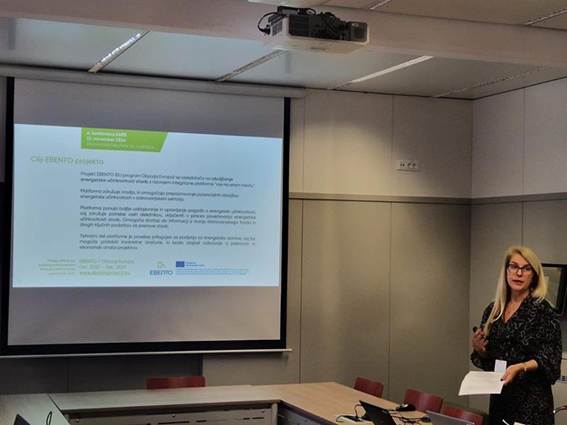
Figure 2: Katarina Kern presenting EBENTO in an event.
“An important milestone was when the early qualitative research began to feed more clearly into later stages of EBENTO,” the team recalls. “It became an important foundation for understanding stakeholder needs, barriers and enabling conditions, and later also for assessing the project’s socio-economic impacts.”
By combining technical engineering knowledge with qualitative research methods, the University helped ensure that EBENTO remained focused not only on what is technically possible, but also on what is feasible and acceptable in practice.
Unlocking the Potential of Energy Performance Contracting
Among the many innovations explored within EBENTO, the University of Ljubljana considers the project’s work on Energy Performance Contracting (EnPC) in residential buildings to be one of its most significant contributions.
Across Europe, improving building energy efficiency requires more than innovative technologies. It also requires business models and financing mechanisms capable of making renovation attractive, affordable and manageable for building owners and residents.
“Even promising solutions will not achieve wider uptake unless they reflect and address stakeholder motivations, concerns, capacities and local realities,” the team explains.
EBENTO helped advance understanding of how EnPC models could be adapted to the residential sector, where their adoption remains limited despite their significant potential.
The relevance of this work is already visible beyond the project itself. In Slovenia, public initiatives such as the Eco Fund’s support schemes for deep renovation projects involving Energy Service Companies (ESCOs) demonstrate growing recognition of the challenges EBENTO has been addressing.
“EBENTO tackled a real gap that public actors have recently also been trying to solve,” the team notes.
Renovation Is a Social Process
One of the strongest messages emerging from the University’s work is that successful renovation is fundamentally a social process.
Through stakeholder engagement activities and socio-economic impact assessments, the team found that technology alone cannot drive change. Citizens need guidance, trust and support throughout the renovation journey.
“One of the most important lessons from EBENTO is that innovative renovation solutions do not work on their own,” the researchers explain.
“Even when a tool, model or service is well designed, people still need support in understanding it, using it and connecting it to their own situation.”
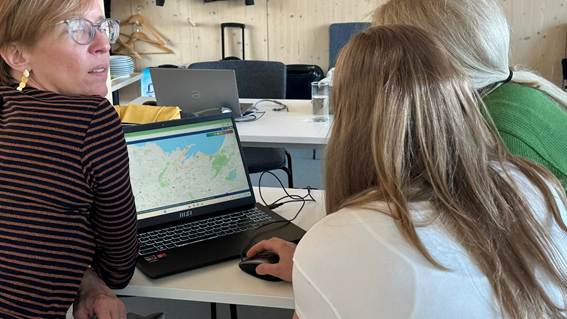
Figure 3: UL FE, IRI UL and JOANNEUM RESEARCH partners in a EBENTO meeting.
This insight has reinforced the importance of combining digital tools with advisory services, mediation mechanisms and local support structures.
The University points to its experience with One-Stop-Shop renovation services as a particularly successful example of this approach. These models bring together municipalities, financial institutions, technical experts and citizens into a single support ecosystem, helping residents navigate every step of the renovation process.
“Our experience shows that successful home renovation is not driven only by digital tools, but by trust, local presence and coordinated guidance throughout the entire customer journey.”
From Passive Citizens to Active Participants
A key question for Europe’s renovation wave is how to encourage citizens to become active participants in improving their homes.
For the University of Ljubljana, the answer lies in trust, communication and empowerment.
“People need to feel that renovation is happening with them, not to them,” the team explains.
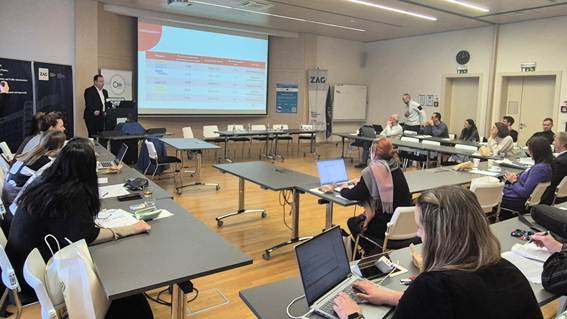
Figure 4: UL FE and IRI UL presented EBENTO in a cluster event.
Their research within EBENTO revealed that participation increases when benefits are tangible, responsibilities are clear and trusted intermediaries help guide the process. Conversely, uncertainty, lack of transparency and distrust often discourage engagement.
“Participation grows when communication is clear, benefits are concrete, trusted intermediaries are involved, and someone within the building or community helps mobilise others.”
This people-centred perspective has become a defining element of the University’s work and offers valuable lessons for future renovation initiatives across Europe.
Lessons for Future Horizon Europe Projects
Reflecting on the project, the University highlights the importance of combining technological innovation with strong local support structures.
Working across multiple pilot sites and diverse implementation contexts presented challenges, particularly in maintaining consistency while respecting local realities. The team addressed this through flexible methodologies, stakeholder engagement and qualitative analysis that complemented more traditional technical and economic assessments.
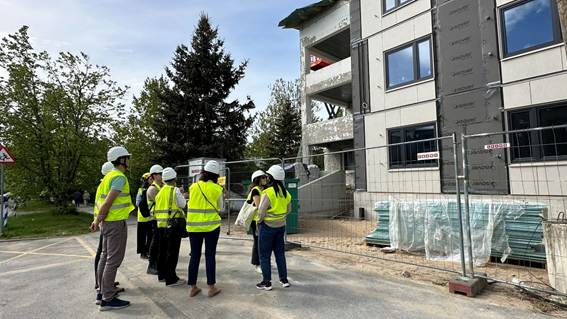
Figure 5: EBENTO team at the Tallinn pilot site visit.
Their main recommendation for future innovation projects is clear:
“One best practice we would recommend is to combine digital innovation with strong local, human-centred support structures.”
The researchers also emphasise the critical role of municipalities as trusted local actors capable of increasing citizen engagement and ensuring the long-term sustainability of project outcomes.
Building on EBENTO’s Legacy
Although EBENTO is coming to an end, the University of Ljubljana is already building on the knowledge generated throughout the project.
The lessons learned are being applied in several new European initiatives, including the EffiComfort project, which is exploring innovative Comfort-as-a-Service models for public and residential buildings, and Renov-AID, which is developing integrated One-Stop-Shop support services for residential renovation in Slovenia.
These initiatives continue the work started in EBENTO by focusing on people-centred renovation processes, stakeholder engagement, innovative financing mechanisms and practical support services.
Looking ahead, the University remains committed to ensuring that Europe’s renovation transition is not only technologically advanced, but also socially inclusive and responsive to the needs of citizens.
“Successful renovation is driven by trust and local presence,” the team concludes. “Digital innovation is important, but it achieves real impact only when it is combined with support systems that help people turn intention into action.”
Through its unique combination of engineering expertise, social science research and stakeholder engagement, the University of Ljubljana has helped ensure that EBENTO’s legacy extends beyond technology—towards a more human-centred approach to energy renovation across Europe.