

ETRA: Coordinating Innovation to Build a Smarter and More People-Centred Future for Building Renovation
Delivering a European Innovation Action requires much more than developing new technologies. It means bringing together organisations with different expertise, aligning diverse perspectives, overcoming technical and regulatory barriers, and ensuring that innovative ideas become practical solutions capable of creating long-term impact.
As coordinator of the EBENTO project and leader of its communication, dissemination and exploitation activities, ETRA has been at the heart of this process. Over the project’s 45-month journey, the organisation has not only coordinated a multidisciplinary consortium across Europe, but has also led the development of some of EBENTO’s flagship digital solutions, helping transform an ambitious concept into a fully operational One-Stop-Shop ecosystem for building renovation.
“Our role was to ensure that all technical developments came together as one coherent ecosystem while keeping people, not technology, at the centre of the project.”
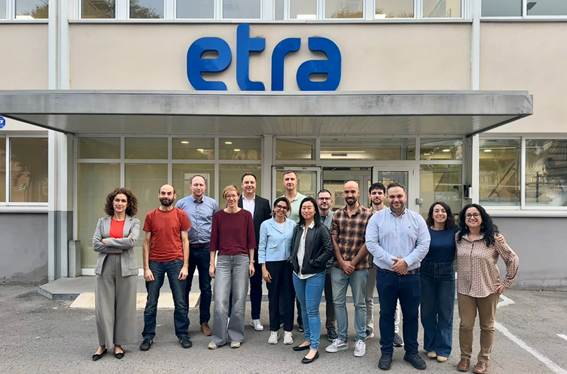
Figure 1. Members of the EBENTO consortium at the ETRA headquarters.
Coordinating a Diverse Consortium Around a Common Vision
EBENTO brought together software developers, research centres, universities, legal experts, facility managers and pilot sites from different European countries. According to ETRA, this diversity became one of the project’s greatest assets.
“The diversity is essential in a project as complex as EBENTO. Industrial partners provide technical expertise, but aspects such as users’ needs, legal frameworks and socio-economic challenges can only be addressed by involving organisations with complementary expertise.”
The pilot sites played a particularly important role, allowing the consortium to validate the platform under real operating conditions while involving citizens, building managers and local authorities throughout the development process.
Beyond the consortium itself, ETRA also highlights the value of engaging external experts from different countries, whose knowledge helped refine both the technical developments and the project’s strategic direction.
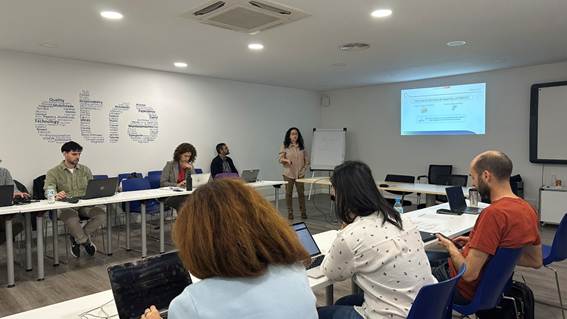
Figure 2. Anais Martínez, project manager, presenting advancements of the EBENTO project.
Building the Digital Backbone of EBENTO
Alongside its coordination role, ETRA was responsible for developing several of EBENTO’s core digital components.
These include the EBENTO One-Stop-Shop platform itself, the 3D Dynamic Map, the Energy Efficiency, Comfort and Environment (ECE) module, the Economic Simulator, and the Energy Performance Contracting (EnPC) modules. The organisation also led the integration of all technical components into a single digital ecosystem capable of supporting the complete building renovation process.
One of the project’s major technical milestones was successfully connecting real pilot buildings to the platform.
“The whole integrated EBENTO solution bridges technical simulations with real-time monitoring and data ingestion, creating a comprehensive ecosystem to support renovation decisions.”
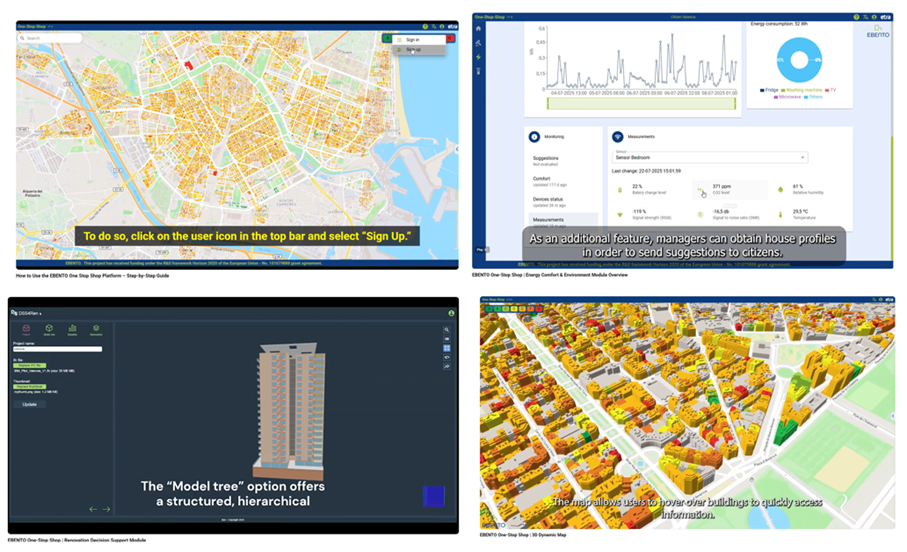
Figure 3. EBENTO One-Stop-Shop and modules demo videos.
Several algorithms developed during the project are now expected to become part of ETRA’s commercial portfolio, including advanced demand response functionalities, comfort assessment tools and intelligent monitoring services.
Turning Complex Data into Practical Decision Support
One of EBENTO’s flagship innovations is its 3D Dynamic Map, designed to make building energy information easier to understand for both professionals and citizens.
Surprisingly, according to ETRA, the greatest challenge was not the software itself.
“The Dynamic Map was not primarily a technical challenge—it became a puzzle of different legislations and data transparency rules across Europe.”
While countries such as Spain provide open access to cadastral information and Energy Performance Certificates, other countries impose restrictions or require payment to access similar datasets. In many cases, property records and energy certificates also follow completely different structures.
“We had to adapt the tools to each country’s legislation and data availability.”
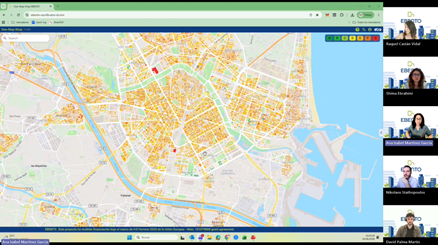
Figure 4. EBENTO One-Stop-Shop webinar.
This flexibility has allowed the platform to accommodate national differences while maintaining a consistent user experience.
Integrating an Entire Digital Ecosystem
Perhaps one of the most demanding aspects of the project was integrating the numerous technical modules developed by different partners into a single operational platform.
To achieve this, ETRA implemented an iterative integration and testing strategy based on proven methodologies.
“Once each module had been validated individually, technical partners created a comprehensive set of tests to verify both data flows and interfaces.”
The process involved multiple development cycles during which technical issues were identified, corrected and re-tested until the entire ecosystem functioned as intended.
At the same time, pilot partners continuously validated the platform using real buildings and real data.
“This iterative process allowed us not only to solve unexpected technical problems, but also to make the platform more intuitive by incorporating suggestions from partners and simplifying highly technical information.”
Communicating Innovation Through Stories
As leader of communication and dissemination, ETRA recognised early that technical excellence alone would not guarantee impact.
Instead of focusing exclusively on project achievements, the team shifted its strategy towards people-centred storytelling.
“Our key strategy was moving from simply providing information to fostering active engagement through impactful storytelling and strategic clustering.”
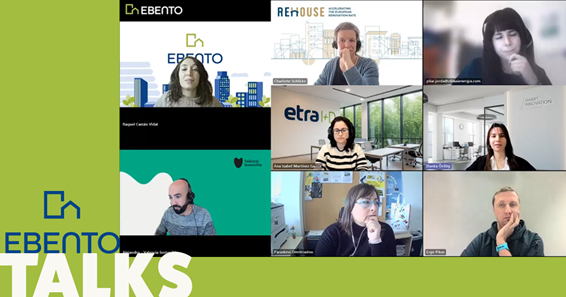
Figure 5. EBENTO Talks series.
This approach gave rise to initiatives such as EBENTO Talks, the Partner Insights Series, From Pilots to Practice videos and guided visits to pilot buildings, helping citizens better understand the practical benefits of renovation.
At European level, ETRA also strengthened collaboration with other Horizon projects through the Network of Building Renovation Projects and partnerships with initiatives such as Built4People.
One particularly memorable milestone came during the EU Sustainable Energy Week (EUSEW), when the European Commissioner for Energy visited the EBENTO stand.
“Hosting the Commissioner validated our work at the highest policy level and reinforced the relevance of the project within the European energy transition.”
By the end of the project, EBENTO had generated more than 80,000 social media impressions, produced 24 specialised videos, organised webinars and workshops, and created communication materials designed to support future adopters.
Delivering Impact Beyond Technology
For ETRA, the project’s greatest achievement is not a single tool but the integrated EBENTO ecosystem itself.
Buildings account for around 36% of CO₂ emissions in the European Union, while approximately 75% of the existing building stock remains energy inefficient. Against this backdrop, EBENTO demonstrates how digital technologies can support more effective renovation planning and better decision-making.
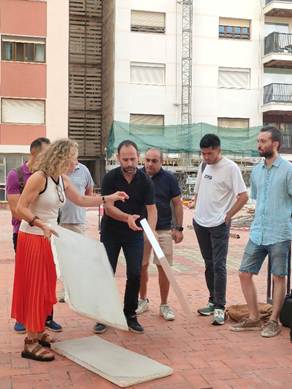
Figure 6. Site visit at the Spanish building.
Across the pilot sites, the platform helped evaluate renovation scenarios capable of reducing CO₂ emissions by between 24% and 77%, while electricity consumption fell by up to 27% depending on the building. Just as importantly, occupants reported significant improvements in indoor comfort, with feelings of discomfort reduced by as much as 67%.
“The whole integrated solution offers a comprehensive set of tools to reduce energy consumption while significantly improving people’s comfort.”
Lessons for Future European Innovation Projects
Reflecting on the project, ETRA identifies several lessons that extend well beyond EBENTO itself.
From a technical perspective, modular system architectures proved essential for managing complexity and ensuring future scalability.
“In a project of this ambition, the architecture must be modular, with each tool having a clear responsibility and well-defined interfaces.”
Pilot validation also emerged as a critical success factor.
“Real pilot conditions reveal issues that cannot be identified during internal development, including data availability, device connectivity and workflow challenges.”
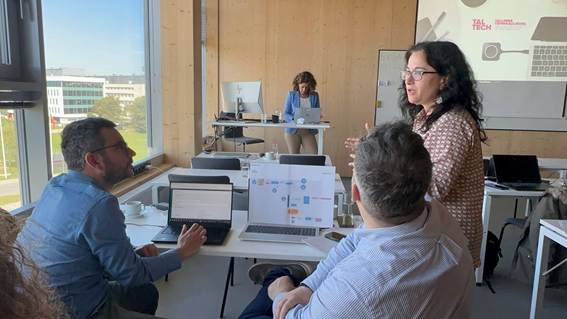
Figure 7. Internal workshop about the EBENTO One-Stop-Shop.
From a communication perspective, the team found that meaningful engagement matters more than simply reaching large audiences.
“Quality beats quantity when building engagement. Trust grows through transparency, proximity and by giving citizens direct access to understandable information.”
ETRA also encourages future Horizon Europe projects to involve end-users from the very beginning and to build long-term digital legacies through open repositories, practical guidance and continuous collaboration.
Looking Beyond EBENTO
Although the project has officially concluded, ETRA sees EBENTO as the starting point for a much longer journey.
The organisation plans to continue developing the platform for at least the next three years, improving existing modules, introducing new Energy Performance Contracting models and expanding the 3D Dynamic Map to additional European countries.
Among the project’s Key Exploitable Results are the One-Stop-Shop platform, the DSS4Ren renovation simulator, the Energy Efficiency, Comfort and Environment module, the Energy Performance Contracting module and the Economic Simulator.
“We want to continue adapting these tools to real market needs and transform them into market-ready solutions that can support cities, energy communities and building owners across Europe.”
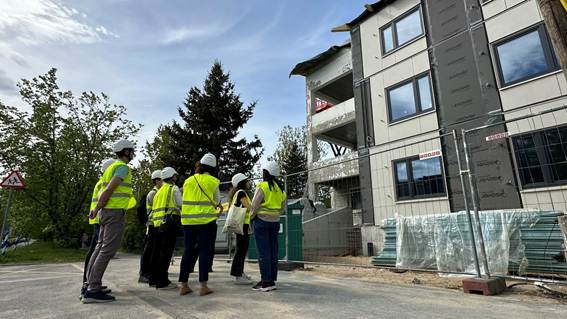
Figure 8. Energia 13 building, one of the Estonian pilot sites.
At the same time, ETRA will maintain EBENTO’s digital legacy through an Open Science Hub, public repositories, training resources and the project’s Replication Handbook, ensuring that the knowledge generated remains available long after the project has ended.
Looking back on almost four years of collaboration, ETRA believes EBENTO’s greatest legacy goes beyond technology.
“EBENTO should be remembered not just as a suite of digital tools, but as a replicable framework proving that technical excellence and social equity go hand in hand.”
By coordinating one of Europe’s most ambitious digital renovation initiatives, ETRA has helped lay the foundations for a future where building renovation is not only smarter and more efficient, but also more accessible, transparent and centred on the people it is ultimately designed to serve.