

JOANNEUM RESEARCH: Redefining Energy Performance Contracting for Europe’s Renovation Future
As Europe seeks to accelerate the renovation of its residential building stock, one challenge remains particularly difficult to overcome: making renovation projects financially attractive for homeowners, investors and service providers.
While technical solutions for improving energy efficiency are increasingly available, many renovation projects still struggle to secure investment due to long payback periods, fragmented decision-making and limited business incentives.
Within the EBENTO project, JOANNEUM RESEARCH (JR) set out to address this challenge by rethinking one of the most established financing mechanisms in the energy sector: Energy Performance Contracting (EnPC).
Through its work on innovative business models, socio-economic assessment and stakeholder analysis, JR helped develop a new generation of EnPC concepts designed to support the energy transition while creating additional value for building owners and residents.
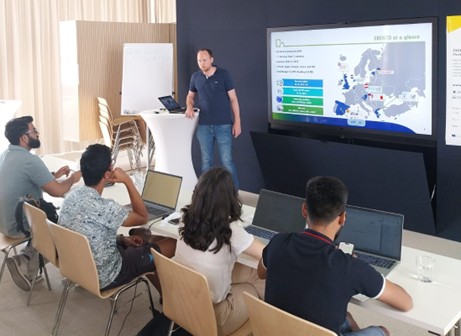 Figure 1. Clemens Mayer of JR presenting EBENTO new business models in a summer school.
Moving Beyond Traditional Energy Performance Contracting
From the outset of EBENTO, JOANNEUM RESEARCH focused on the development of innovative business models capable of making residential renovation more economically viable.
A major achievement was the creation of an enhanced Energy Performance Contracting model that extends beyond the traditional focus on energy savings.
The concept incorporates additional revenue streams generated through flexibility services, demand response participation and comfort-related benefits, creating a more comprehensive and attractive business proposition for renovation projects.
“A key result was the definition of an enhanced EnPC concept that goes beyond classical energy savings by integrating flexibility revenues, demand response, and comfort-related value into the business model.”
This work became one of the foundational elements of EBENTO’s business model strategy and was further validated through scientific dissemination at the REAL CORP conference, where the concept was presented and published in the conference proceedings.
For JR, this represented a significant milestone in the project.
“By integrating flexibility revenues and comfort aspects into the EnPC logic, we helped to sharpen the project’s core business model concept early on.”
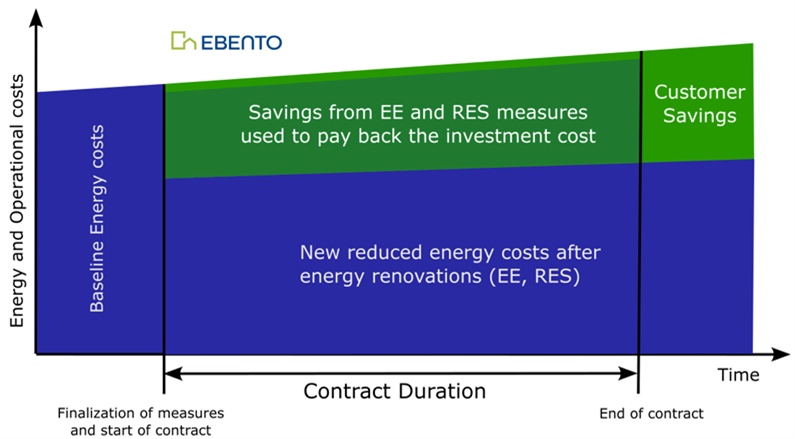
Figure 2. Energy savings and cost of a typical EnPC.
Tackling the Financial Barriers to Renovation
Across Europe, one of the main obstacles to large-scale residential renovation remains economic feasibility.
Traditional Energy Performance Contracting models often rely exclusively on future energy savings to recover investment costs. However, in many residential settings, these savings alone are insufficient to generate attractive returns within a reasonable timeframe.
JR’s research highlighted the importance of expanding the value proposition.
“The market outlook showed that payback periods in residential renovation are often very long, making it difficult to refinance investments through energy cost savings alone.”
By incorporating flexibility revenues generated through both implicit and explicit demand response schemes, the enhanced EBENTO model offers new pathways for improving project profitability.
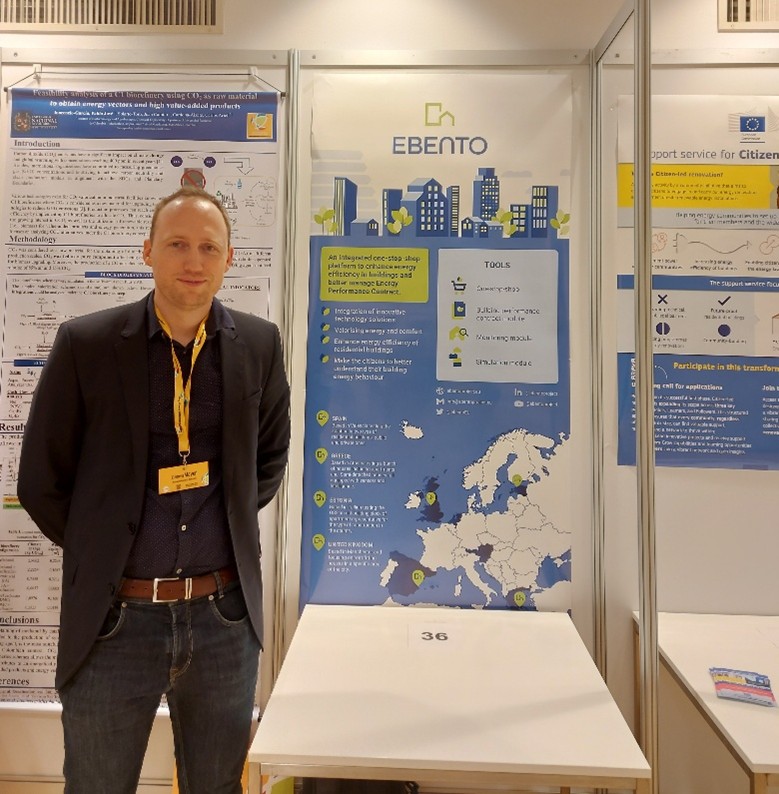 Figure 3. Clemens Mayer of JR presenting EBENTO in the exhibition area of the World Sustainable Energy Days 2024 in Austria.
“A concrete example is the development of a new EnPC concept that integrates implicit and explicit flexibility services. By considering flexibility revenues and energy cost savings alongside traditional energy savings, the model shows a pathway to shorten payback periods and make EnPCs more attractive for residential buildings.”
This approach aligns closely with the evolving European energy landscape, where buildings are increasingly expected not only to consume energy efficiently but also to actively contribute to grid flexibility and system stability.
Creating Value Beyond Energy Savings
While economic viability is essential, JOANNEUM RESEARCH’s work also highlighted the importance of considering broader societal benefits.
The team’s socio-economic analyses revealed that residents often value comfort and quality-of-life improvements as much as, or even more than, direct energy savings.
“Beyond energy savings, the most relevant qualitative benefits identified are increased comfort and higher property value.”
Renovation measures can significantly improve indoor living conditions by creating more stable temperatures throughout the year, reducing discomfort during both winter and summer months.
“These improvements directly enhance wellbeing for residents while also increasing the attractiveness and long-term value of properties.”
This finding reinforces a key message emerging from EBENTO: successful renovation strategies should communicate multiple benefits, not just reduced energy consumption.
The Power of the One-Stop-Shop Approach
Among EBENTO’s many innovations, JR considers the combination of the One-Stop-Shop (OSS) model and enhanced Energy Performance Contracting to be one of the project’s most impactful achievements.
The renovation journey can often be overwhelming for homeowners due to administrative complexity, technical uncertainty, financing challenges and fragmented information sources.
According to JR, integrating innovative business models within a comprehensive support ecosystem can help overcome these barriers.
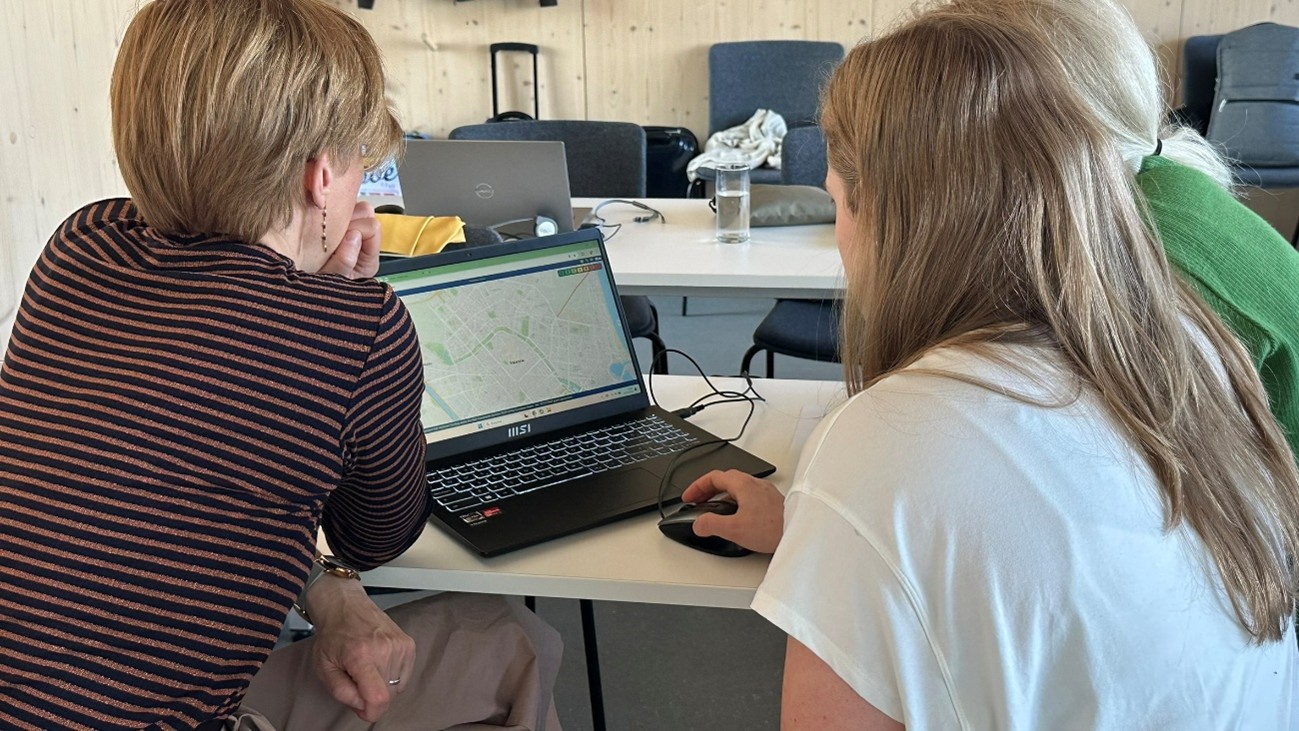
Figure 4. UL and JR partners testing the EBENTO One-Stop-Shop.
“The most impactful result is the combination of the one-stop-shop approach with enhanced EnPC business models. This addresses several major barriers to residential renovation at once: complexity, lack of trust, high transaction costs, financing uncertainty, and the need to communicate benefits beyond energy savings.”
By simplifying decision-making and providing coordinated support, the OSS approach increases the likelihood that innovative financing and contracting models can be successfully adopted in practice.
Lessons for Future Innovation Projects
Like many Horizon Europe projects, EBENTO brought together diverse pilot environments with different technical conditions, stakeholder groups and implementation realities.
For JOANNEUM RESEARCH, one of the main challenges was evaluating economic performance consistently across these highly varied contexts.
Moreover, while the project developed innovative EnPC concepts, the pilot activities themselves were not implemented through the full enhanced contracting model, making direct validation more difficult.
“The pilots were not implemented through the enhanced EnPC models with flexibility elements defined in the project, which made it difficult to directly prove the full business model concept within EBENTO.”
This experience led to an important lesson for future projects.
“A key best practice is to align pilot implementation, business model development, and impact assessment as early and as closely as possible.”
Doing so allows innovative concepts to be tested under real-world conditions while generating robust evidence to support future market uptake and replication.
Building on EBENTO’s Legacy
Although the project is coming to a close, JOANNEUM RESEARCH sees significant opportunities to further develop the concepts created within EBENTO.
The enhanced EnPC model provides a foundation for future research and innovation activities focused on demand-side flexibility, performance-based renovation, energy services and socio-economic impact assessment.
“A key lesson is that future EnPC models need to move beyond a narrow focus on energy savings.”
“Flexibility, comfort, user acceptance and wider socio-economic benefits must be integrated into the business model to improve the viability of renovation projects.”
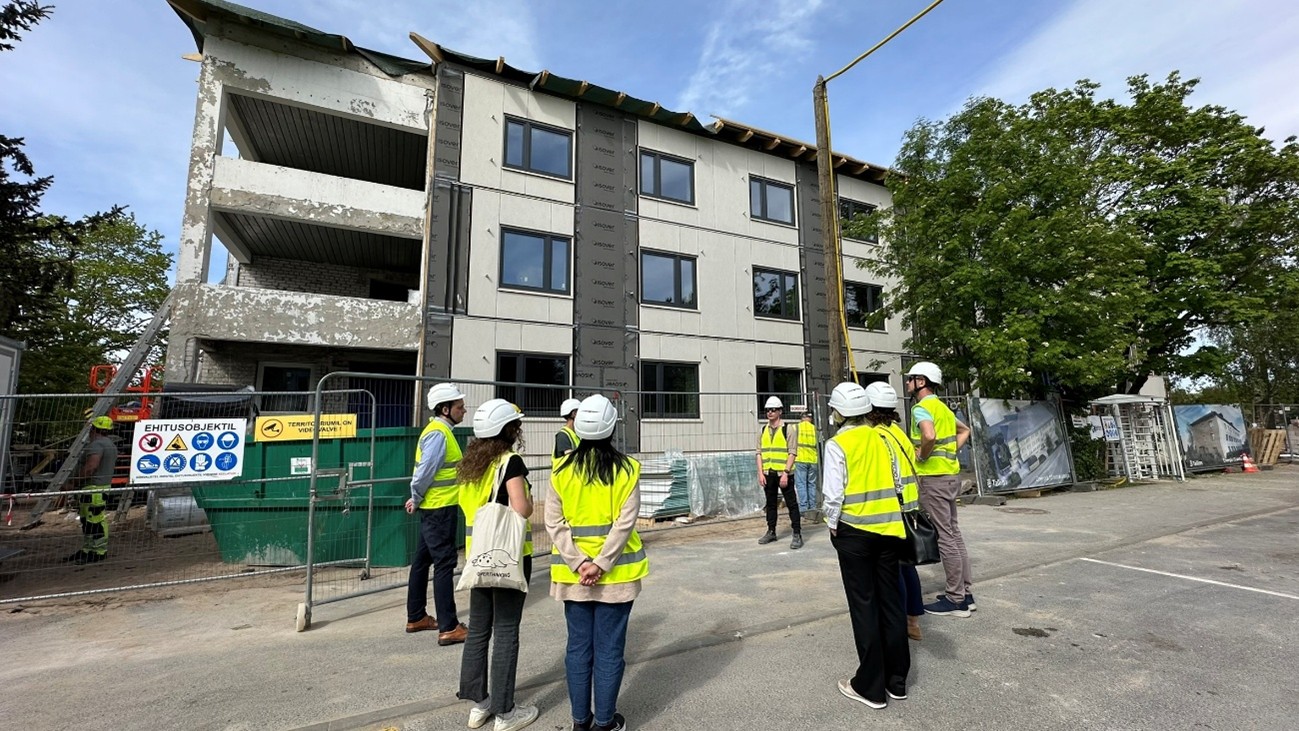 Figure 5. EBENTO partners visiting one of the buildings of the Tallinn pilot site.
Looking ahead, JR intends to continue building on EBENTO’s findings through new research initiatives and policy-oriented projects that explore innovative financing and contracting mechanisms for residential renovation.
As Europe works towards its climate and energy goals, JOANNEUM RESEARCH believes that the future of renovation will depend not only on better technologies, but also on smarter business models capable of turning ambitious energy targets into financially viable opportunities for citizens, investors and communities alike.