

IEECP: Building the Business and Legal Foundations for a New Generation of Energy Performance Contracting
Across Europe, improving the energy performance of residential buildings is no longer just a technical challenge—it is also a financial and legal one. While innovative renovation technologies continue to emerge, many projects struggle to move forward because existing business models, contractual frameworks and financing mechanisms are not designed for the residential sector.
Within the EBENTO project, the Institute for European Energy and Climate Policy (IEECP) has played a central role in addressing these barriers. Drawing on its expertise in energy policy, business models and impact assessment, IEECP led the development of EBENTO’s Energy Performance Contracting (EnPC) framework, designed innovative contract models, analysed legal barriers across Europe and developed the project’s socio-economic impact assessment methodology.
“Our objective was to create contractual and business frameworks that make performance-based renovation more accessible, particularly for SMEs, smaller ESCOs and residential building owners.”

Figure 1. Dimitra Tzani and Indriany Lionggo (IEECP team) in an EBENTO meeting.
Rethinking Energy Performance Contracting for the Residential Sector
Traditional Energy Performance Contracts have successfully supported energy efficiency projects in large commercial and public buildings. However, they have struggled to gain traction in residential renovation, where projects are smaller, payback periods are longer and investment risks are perceived to be higher.
Recognising these limitations, IEECP led the development of an enhanced EnPC framework capable of addressing today’s energy market realities.
Rather than relying solely on guaranteed energy savings, the new models developed within EBENTO integrate additional value streams such as demand response services, flexibility revenues and indoor comfort guarantees.
“This work directly addresses one of the most persistent structural problems in the European renovation market: conventional Energy Performance Contracts are designed for large, well-capitalised actors and leave SMEs and smaller ESCOs effectively locked out.”
The result is a family of five contract types, each tailored to different market needs and levels of risk, allowing organisations to progressively adopt performance-based contracting without requiring significant upfront financial capacity.
By broadening the value proposition beyond energy savings alone, these models create new business opportunities while making renovation investments more attractive.
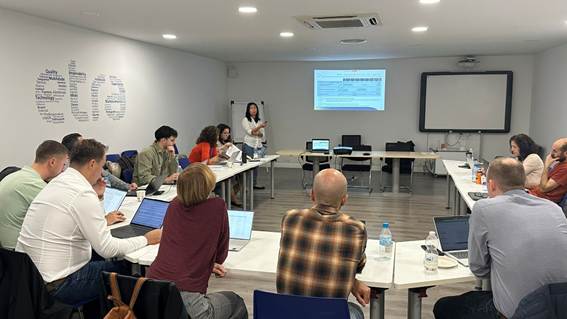
Figure 2. Indriany Lionggo presenting IEECP progress.
Making Renovation More Bankable
One of EBENTO’s key ambitions has been to reduce the financial barriers that prevent large-scale residential renovation.
According to IEECP, one of the most promising innovations lies in combining traditional energy savings with revenues generated through building flexibility.
“A concrete innovation is the integration of implicit and explicit demand response services into Energy Performance Contracts.”
Instead of depending exclusively on reduced energy bills, building owners and Energy Service Companies (ESCOs) can also generate value by providing flexibility services to the electricity system.
“These additional revenue streams reduce dependence on energy savings alone, shorten payback periods and improve the financial viability of projects that would otherwise remain marginal.”
Combined with EBENTO’s One-Stop-Shop platform, the new contract models simplify contractual management while reducing transaction costs and administrative burdens that have historically discouraged smaller market actors from participating.
Navigating Europe’s Complex Legal Landscape
Developing innovative business models was only one part of the challenge.
Because EBENTO operates across Spain, Greece, Estonia and the United Kingdom, IEECP also carried out an extensive legal analysis to understand how Energy Performance Contracts are regulated within different national frameworks.
One of the project’s most important findings was that there is still no harmonised legal definition of Energy Performance Contracting across Europe.
“The biggest legal obstacle is the fragmentation and legal ambiguity of how Energy Performance Contracting is classified under national law.”
Depending on the country, the same contract can be considered a service agreement, a financial lease or a public-private partnership, each carrying different legal and financial implications.
Beyond contractual classification, the project also explored emerging legal questions surrounding indoor comfort guarantees, flexibility revenues and data protection requirements associated with continuous building monitoring.
To address these challenges, IEECP developed a comprehensive contractual framework based on European standards while providing country-specific guidance that supports practical implementation.
“The result is a legal and contractual framework that is rigorous enough to be enforceable while remaining accessible for SMEs and other market actors.”
Building Trust Through Transparent Impact Assessment
Innovation only succeeds if investors, building owners and public authorities trust the results.
As leader of EBENTO’s impact assessment activities, IEECP developed a comprehensive methodology to verify both the economic and social impacts of renovation projects.
The framework combines financial indicators—such as investment costs, return on investment, payback periods and flexibility revenues—with social indicators including thermal comfort, indoor air quality, affordability, user acceptance and job creation.
“Investor confidence in energy renovation depends above all on the credibility of what is measured and how.”
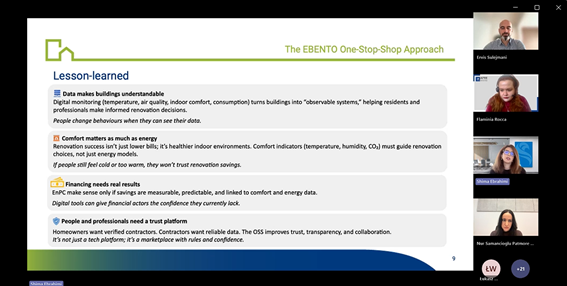
Figure 3. Shima Ebrahimi participating in a cluster event.
Rather than treating impact assessment as a final reporting exercise, EBENTO integrates continuous monitoring directly into the One-Stop-Shop platform, enabling transparent verification throughout the lifetime of renovation projects.
“Verification in EBENTO is not a one-off end-of-project evaluation but an ongoing process integrated into the platform.”
This continuous approach strengthens confidence among investors while providing building owners with reliable evidence of performance over time.
Lessons for Future European Projects
Looking back on the project, IEECP believes one of the biggest lessons is that innovative business models, legal frameworks and pilot implementation should evolve together from the very beginning.
Developing advanced contractual concepts is not enough if they cannot be demonstrated under real operational conditions.
“Future projects should align pilot implementation, business model development and impact assessment as early and as closely as possible.”
The project also highlighted the importance of designing contractual frameworks that reflect the multiple benefits of renovation, including comfort, flexibility and wider socio-economic impacts—not simply reductions in energy consumption.
“Future EnPC models need to move beyond a narrow focus on energy savings.”
Continuing EBENTO’s Legacy
Although EBENTO is coming to an end, IEECP sees its outcomes as the starting point for a new generation of performance-based renovation services.
The enhanced contractual models, legal methodologies and impact assessment frameworks developed during the project will continue to support future European research initiatives, policy advice and market development activities.
The organisation also plans to build upon the project’s findings to further explore innovative financing mechanisms, demand-side flexibility, socio-economic impact assessment and regulatory frameworks capable of accelerating residential renovation across Europe.
As Europe moves towards a more flexible, digital and decarbonised energy system, IEECP believes that successful renovation will depend not only on better technologies, but also on smarter contracts that fairly distribute risks, reward performance and create confidence for all stakeholders.
By redefining how Energy Performance Contracting can work in the residential sector, IEECP has helped lay the business, legal and financial foundations needed to make Europe’s renovation ambitions a practical reality.